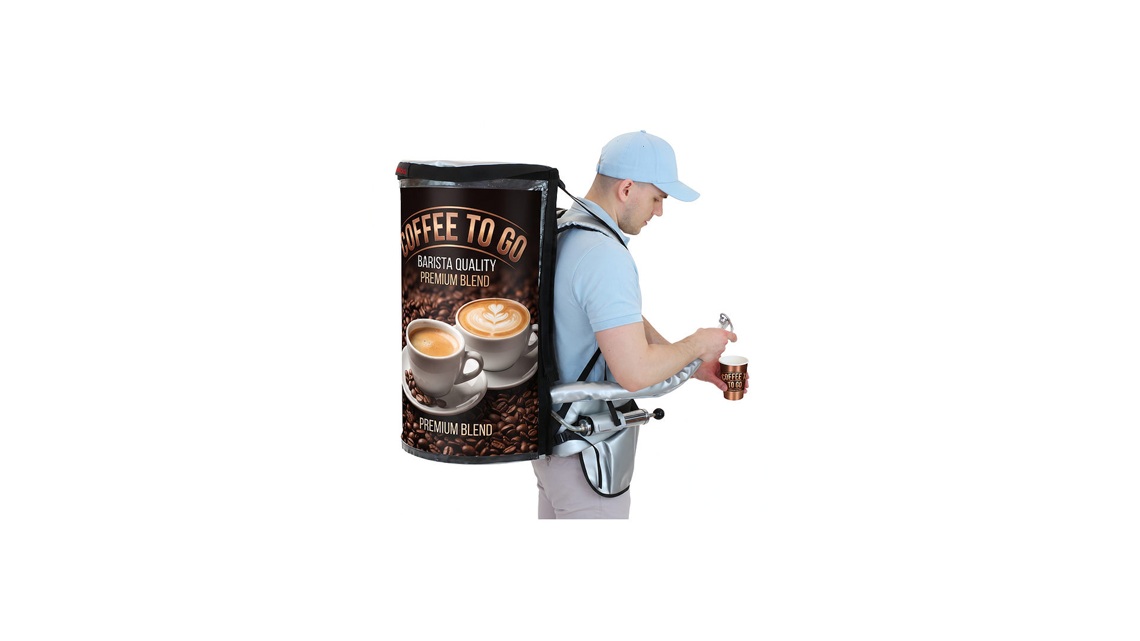
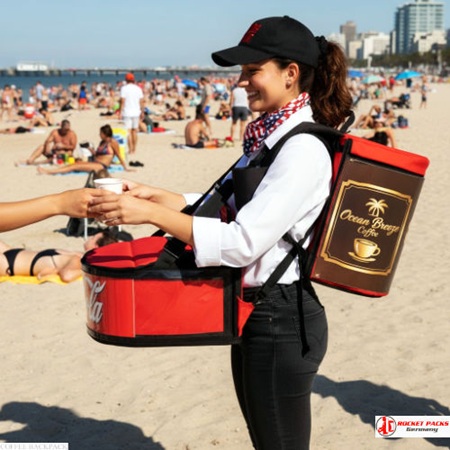
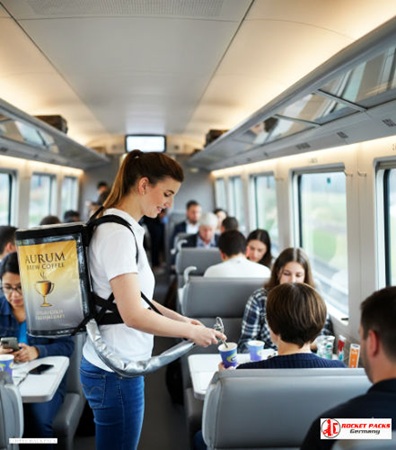
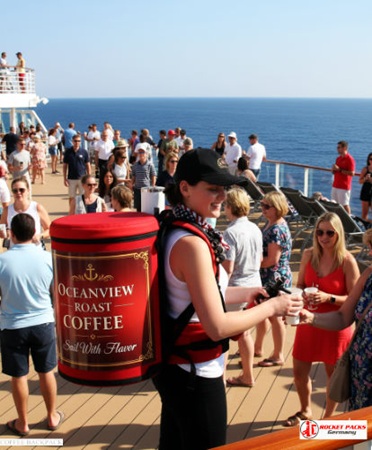
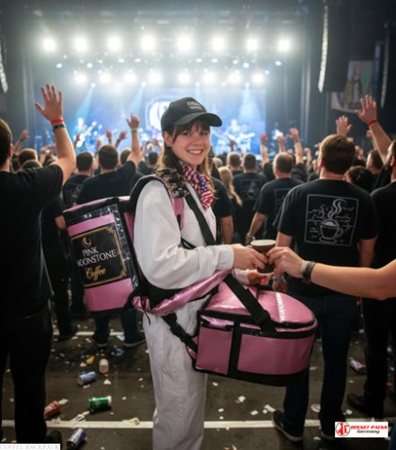
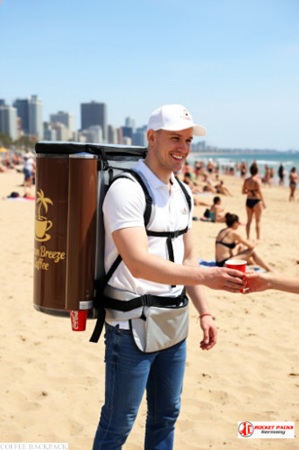
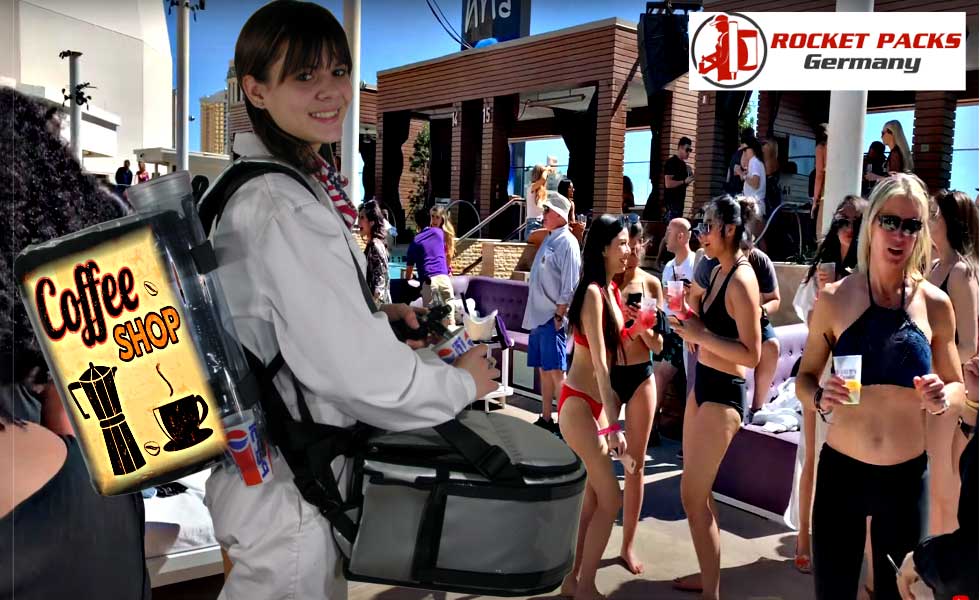
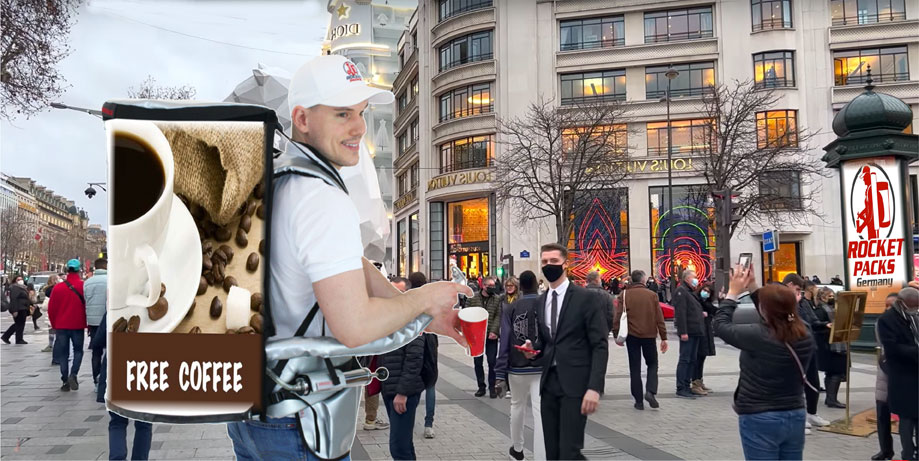
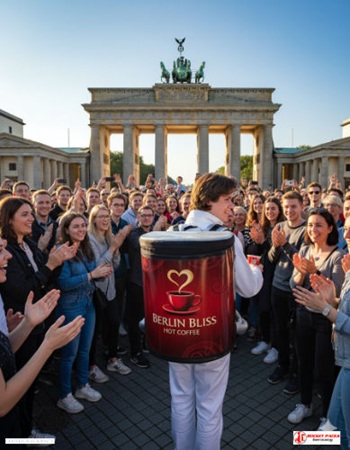
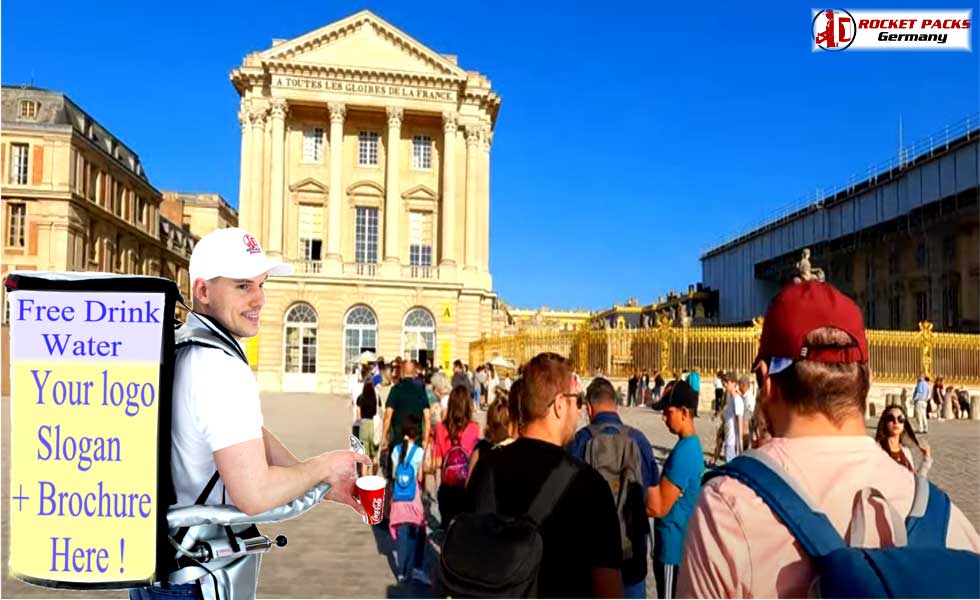
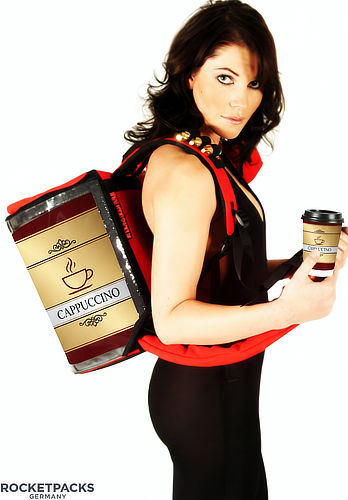
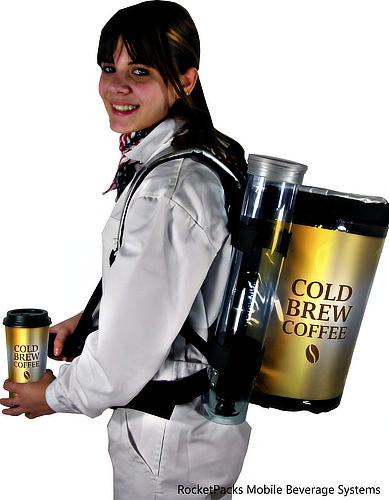
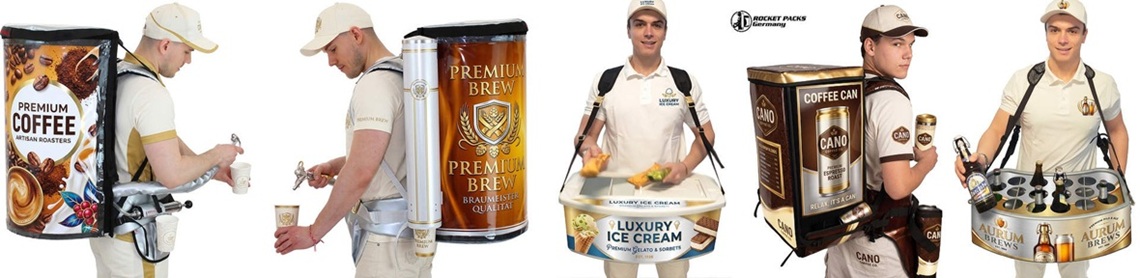
A coffee dispensing backpack transports prepared beverages from a refill station to the customer and dispenses them through a hose and hand-operated tap. The container, tap, cup system and carrying capacity should be selected according to the coffee recipe and the planned service procedure. These answers explain the technical points that should be clarified before choosing a configuration.
What is the difference between a coffee backpack and a coffee dispensing backpack?
Both terms generally describe a wearable system for transporting and serving prepared coffee. The term coffee dispensing backpack emphasizes that the beverage is released from an internal container through a hose and tap.
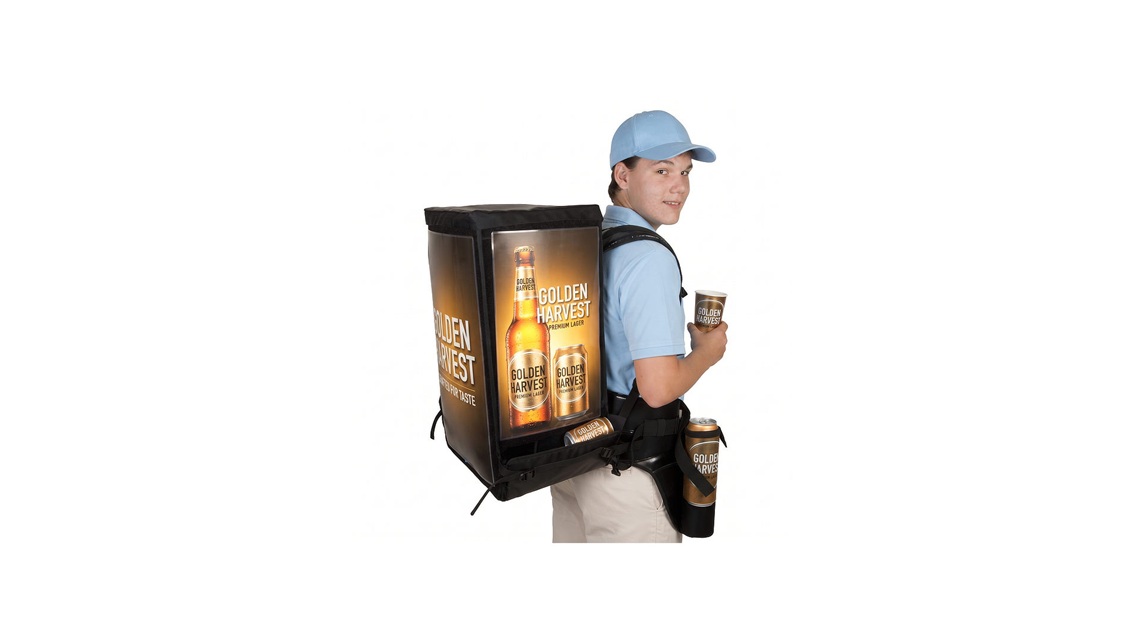
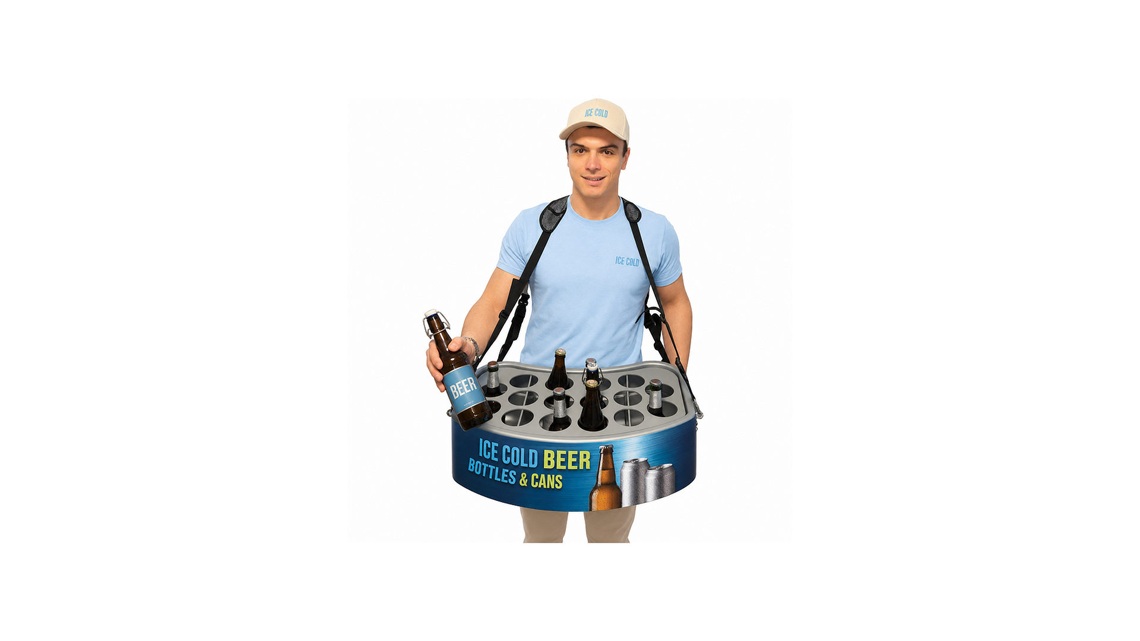
It should not be confused with a backpack used only to carry packaged coffee cups, cans or bottles.
What happens inside the backpack when the tap is opened?
The coffee travels from the beverage container through a connected hose to the dispensing tap. In a suitable configuration for still beverages, gravity provides the required flow.
The container must be positioned correctly and the liquid path must remain free of restrictions. The backpack does not brew, mix or heat the beverage during this process.
Does still coffee require a pressure pump?
Normally, still coffee can be served from a gravity-fed configuration without a manual air pump or CO2 supply. This keeps the operating process straightforward and avoids unnecessary pressure equipment.
Only components specified for the selected backpack should be installed. Pressure should not be added to a gravity system unless the configuration is expressly designed for it.
When could a pressurized configuration be relevant?
Pressure equipment is primarily required for carbonated beverages. A universal backpack may also be ordered with pressure-compatible components when it will be used for different types of drinks.
For a system intended exclusively for still coffee, tea or hot water, a gravity-fed version is generally the simpler choice.
Which tank material is suitable for professional coffee service?
Stainless-steel beverage containers are generally preferable for repeated professional use with coffee and other hot beverages. They are robust, can be preheated and are less susceptible to retaining beverage aromas than many plastic containers.
A food-compatible plastic tank can provide a lower-cost option for selected applications. However, frequent use with strongly coloured or aromatic drinks may leave visible discolouration or residual aroma over time.
Why should the coffee be filtered before filling?
Coffee grounds and other solid particles can enter the hose, fittings or tap and restrict the beverage flow. The finished drink should therefore be filtered before it is transferred into the container.
Even small quantities of sediment can accumulate in narrow internal passages and make cleaning more difficult.
Can instant coffee be prepared directly inside the tank?
The beverage should preferably be mixed completely in a separate preparation vessel. This makes it easier to dissolve the powder, control the recipe and check that no clumps remain.
Pouring powder directly into the backpack container can leave undissolved deposits in the tank or allow particles to enter the beverage line.
Can sugar or syrup be mixed into the coffee before filling?
Fully dissolved sugar or a sufficiently fluid syrup may be included in a prepared recipe. The mixture must remain thin enough to pass through the hose and tap.
Sweetened drinks leave more adhesive residue than black coffee and require prompt, thorough cleaning after service.
Can a prepared latte or cappuccino be dispensed?
A fluid, pre-mixed coffee-and-milk beverage may be technically dispensable, but the backpack cannot create milk foam or prepare the drink cup by cup.
Dairy ingredients require controlled preparation, temperature monitoring and immediate cleaning. Thick foam, skin formation or incompletely mixed ingredients can interfere with dispensing.
Is the system suitable for thick hot chocolate?
Compatibility depends on the finished consistency. A thin and completely dissolved chocolate beverage may flow through an appropriate system, while a thick recipe can move slowly or block the tap.
The actual product should be tested with the selected hose and tap before it is served at an event.
Can spices be added to coffee or chai?
Finely dissolved flavourings may be possible, but loose spices, seeds and plant pieces should not enter the beverage tank. They can settle at the outlet or become trapped inside the tap.
Spiced beverages should be filtered carefully before filling.
How is the stainless-steel container prepared for hot coffee?
Before filling, the clean container can be rinsed with hot water to reduce the immediate loss of heat when the coffee enters the metal vessel.
The preheating water must be emptied completely. The prepared coffee can then be transferred carefully into the container.
How can a container be prepared for iced coffee?
The beverage and container should be cooled before filling. The stainless-steel tank can be rinsed with cold water or pre-cooled where suitable facilities are available.
The backpack insulation slows down temperature change but does not actively refrigerate the drink.
Should ice cubes be placed inside the beverage tank?
Loose ice cubes are not recommended unless the selected system has been specifically assessed for this use. Ice can move toward the outlet, restrict the liquid path and alter the recipe as it melts.
It is normally more practical to chill the prepared beverage before filling or add ice separately to the serving cup.
How should coffee be transferred into the container?
The backpack should be removed from the operator and placed securely at the refill station. Coffee can then be poured into the open filling port using a clean jug or suitable funnel.
The outside of the container, closure and fittings should remain clean and dry before the system is returned to service.
How can spills be prevented during refilling?
Use a stable work surface and a pouring vessel that can be controlled safely when filled with hot liquid. The backpack opening should be fully accessible before the transfer begins.
Do not attempt to refill the system while it is being worn or while the container is unstable.
Why can the coffee flow become slower during service?
A slower flow can result from a kinked hose, coffee residue, an obstructed tap, an incorrectly positioned container or a restricted air inlet in a gravity-fed system.
The backpack should be returned to the service station for inspection. Additional pressure should not be applied as a substitute for identifying the cause.
Why does the tap continue to drip after dispensing?
Dripping may be caused by residue inside the tap, a worn seal, incomplete closing or a component that has not been assembled correctly after cleaning.
The tap should be inspected before the next service period. Persistent leakage should not be treated as normal operation.
What should be checked when no coffee reaches the tap?
First confirm that the tank contains sufficient beverage and that the hose is connected correctly. Check whether the hose is bent, compressed or trapped inside the backpack.
The tap and container outlet should also be inspected for dried residue or solid particles. Do not insert sharp objects into beverage-contacting components to remove a blockage.
Can the serving quantity be adjusted at the tap?
The operator controls the amount by opening and closing the tap. A compensator tap additionally allows the flow rate to be regulated at the dispensing point.
The required setting depends on the drink, serving cup and desired working speed. It should be established during a practical test before the event.
Is a premium compensator tap necessary for still coffee?
A standard tap can be sufficient for uncomplicated still-beverage service. A compensator tap provides additional flow adjustment and may be useful when different cup sizes or more precise dispensing control are required.
The preferred tap should be selected according to the operating procedure rather than automatically choosing the most complex version.
Can the operator dispense an exact measured portion?
The standard hand-operated tap does not automatically measure or stop at a programmed volume. The operator observes the cup and closes the tap manually.
Consistent portion sizes therefore require suitable cups, a defined fill level and practical staff training.
How many cups can be prepared from one filling?
The theoretical quantity can be estimated by dividing the actual filling volume by the serving size. Operational allowances should be included for test pours, partially filled cups and beverage remaining in the hose and tank.
The practical result also depends on the recipe and whether milk or other ingredients are added separately.
Which cup sizes fit the universal dispenser?
The universal cup dispenser is designed for many disposable and reusable cups with capacities from approximately 100 to 550 millilitres and rim diameters between approximately 60 and 95 millimetres.
The cup shape must also be considered. Handles, unusual rims or strongly tapered cups may prevent reliable dispensing from the holder.
Can paper cups for hot drinks be carried in the dispenser?
Suitable paper cups can be used when their rim dimensions and shape match the dispenser. A sample should be checked before a larger quantity of cups is ordered for an event.
The cups should be stored dry and protected from contamination during transport and refilling.
Where can cup lids be stored?
Lids are not automatically accommodated inside the universal cup dispenser. They can be organized in the vendor’s apron, at a fixed service point or in another suitable clean holder.
The storage position should not interfere with the beverage hose, tap or movement of the operator.
Can milk, sugar and stirrers be carried with the backpack?
The vendor’s apron can provide pockets for selected service items. The practical arrangement depends on the packaging, required quantities and hygiene concept.
Open milk containers or loose ingredients should not be positioned where they can spill onto the tap, hose or backpack harness.
How should two coffee varieties be served at the same time?
Two separate beverage systems can be assigned to different products, such as regular and decaffeinated coffee. This provides clear separation and allows each operator to carry a manageable load.
A compatible dual-container backpack may also serve two drinks independently. The total loaded weight and availability of the selected model must be considered carefully.
How can regular and decaffeinated coffee be distinguished?
Each backpack, tap and refill container should be labelled clearly. Different poster inserts, cup markings or internal identification tags can reduce the risk of product confusion.
The refill team and mobile operators should use the same naming and identification system.
Can hot and cold coffee be served from one backpack?
A single-container system holds one prepared beverage at a time. Changing between hot and cold products requires emptying and cleaning the complete beverage path.
For simultaneous service, separate systems or a suitable dual-container configuration are more practical.
What should be included in the pre-service functional test?
The test should reproduce the planned operating conditions and include:
- The actual prepared coffee recipe
- The intended filling temperature
- The planned quantity inside the tank
- The selected hose and tap
- The cups used at the event
- The loaded backpack fitted to the operator
- The expected walking and serving movements
This test can identify unsuitable flow, leaking connections, cup incompatibility or handling difficulties before customers are served.
Can the system be tested using only water?
Water is useful for checking the basic liquid path and visible connections after cleaning. However, it may flow differently from sweetened coffee, milk drinks or chocolate beverages.
A final test should therefore be performed with the intended drink when recipe compatibility is important.
How should the tap be handled while the operator is walking?
The tap should be secured in its designated carrying position so that it does not swing, touch the floor or contact surrounding objects.
The operator should stop in a stable position before removing the tap and filling a cup.
How can serving staff maintain consistent portions?
Use one defined cup size and agree on a visible fill level before service begins. Staff should practise opening and closing the tap smoothly without overfilling.
Changing between several cup sizes during the same service period can make portion and stock calculations less reliable.
Does the backpack guarantee a specific number of cups per hour?
No. The complete service time includes approaching the customer, taking or presenting the cup, dispensing, adding a lid or accessories and moving to the next guest.
The achievable rate depends on the portion size, operator, venue layout and whether payment or product information is also handled.
What causes coffee residue to build up inside the system?
Residue can form when coffee, sugar, milk or syrup remains inside the tank, hose or tap after service. Heat can cause these deposits to dry more quickly.
Prompt cleaning is therefore more effective than allowing a partly filled system to remain unused for several hours.
Which components must be included in cleaning?
The complete beverage path must be treated:
- Beverage container
- Container outlet
- Hose and connectors
- Internal passages of the tap
- Filling accessories that contact the beverage
Cleaning only the visible interior of the tank leaves residue inside the remaining components.
How should the system be cleaned after sweetened coffee?
Empty the remaining beverage and rinse the complete liquid path with clean water before the residue dries. A suitable beverage-system cleaning product can then be used according to its instructions.
Rinse repeatedly with clean water afterwards and allow the components to drain and dry before storage.
What requires particular attention after milk-based beverages?
Milk residue must be removed promptly from the container, hose, fittings and tap. The event or catering operator must apply an appropriate hygiene procedure for dairy products.
The system should not be stored or refilled with another beverage until it has been cleaned completely.
Can the backpack be used again immediately after rinsing?
For a refill with the same beverage during an event, the operator’s defined hygiene procedure applies. After complete cleaning or before storage, the components should be allowed to drain properly.
Any cleaning-agent residue must be removed before another beverage is introduced.
How can a coffee brand be displayed on the backpack?
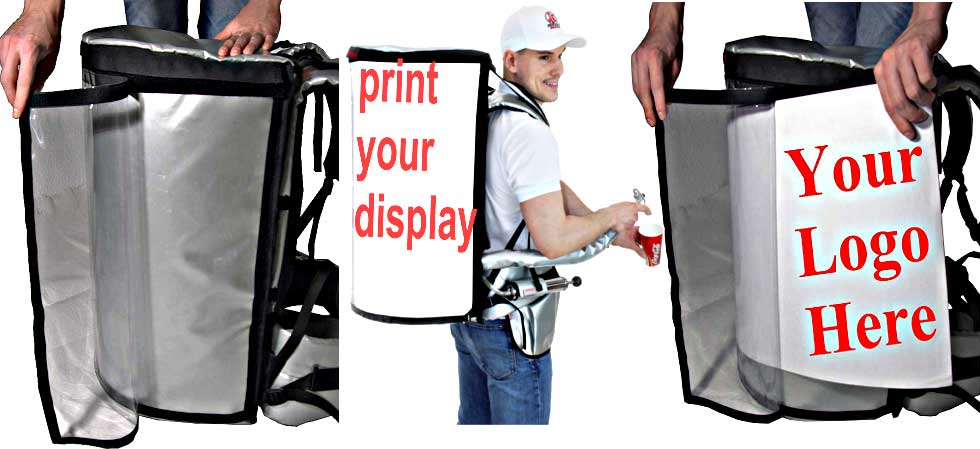
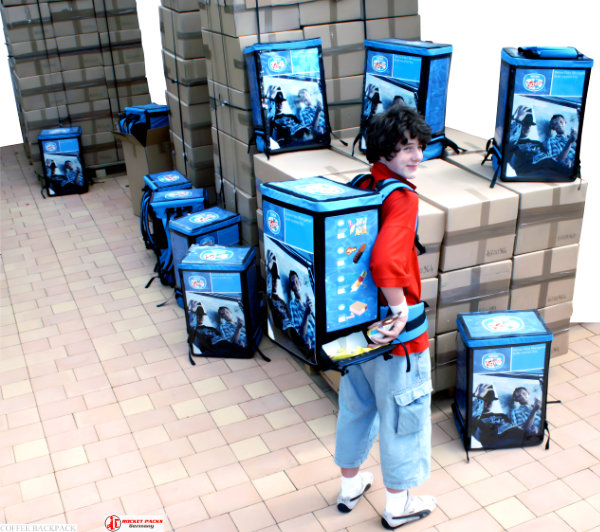
Depending on the model, printed paper graphics can be inserted behind transparent display surfaces. The inserts can present the coffee brand, campaign message or beverage identification.
The visible dimensions vary by backpack. Artwork should only be finalized after the selected model has been confirmed.
Is permanent full-surface printing included?
No. Standard equipment does not automatically include permanent printing or complete custom covering of the backpack.
Replaceable paper inserts are often more practical because the message can be changed for different drinks, clients or campaigns.
Which information is needed to select the dispensing configuration?
Please provide details about the actual beverage and serving workflow:
- Required number of backpacks
- Black coffee, tea or prepared speciality drink
- Ingredients such as milk, sugar or syrup
- Hot or cold serving temperature
- Preferred filling capacity
- Required cup volume and rim diameter
- Standard or compensator tap preference
- Expected mobile service duration
- Distance to the refill point
- Required advertising surfaces
- Requested delivery date
- Delivery country and postal code
If the recipe has an unusual consistency, provide the product information or arrange a practical compatibility test before a larger order is planned.