Global Distribution and Support for International Event Agencies
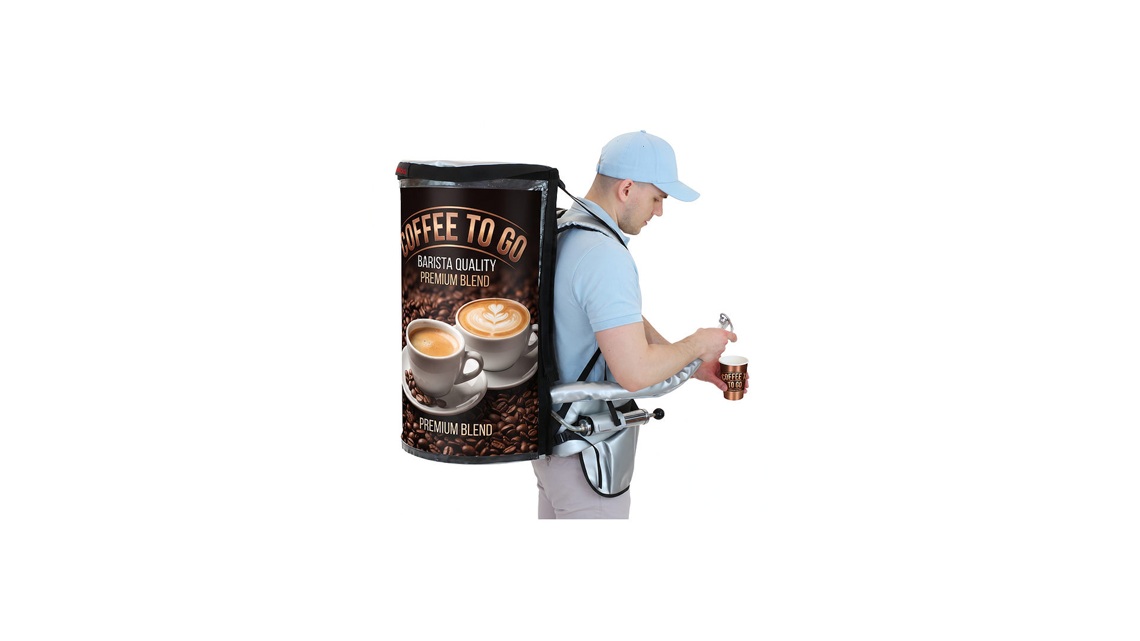
- The Coffee Vendor Backpack is your mobile coffee solution!
- Perfect for festivals, outdoor events, and mobile coffee sales.
- Serve fresh coffee wherever you go.
Frequently Asked Questions About Coffee Vendor Backpack Operations
The video provides an example of prepared coffee being sold or distributed by a mobile vendor. A successful operation requires more than the backpack itself: the beverage menu, serving route, refill process, cup supply, payment method and staff responsibilities must also be planned. The following answers help event organizers, caterers and promotional teams prepare a practical mobile coffee service.
What does the coffee vendor backpack video demonstrate?
The video shows the visible part of mobile coffee service. It provides an impression of how an operator can carry prepared coffee, approach customers and dispense the beverage away from a fixed counter.
The footage is an application example. The appropriate backpack model, filling capacity and accessories depend on the beverage, venue and planned operating procedure.
What is a coffee vendor backpack?
A coffee vendor backpack is a wearable beverage dispensing system used by a mobile seller or service employee. Prepared coffee is carried in a container inside the backpack and served through a beverage hose and hand-operated tap.
The system allows the serving point to move within an approved area instead of remaining permanently at one coffee counter.
Does Rocket Packs provide the coffee catering service shown in the video?
No. Rocket Packs manufactures and supplies the beverage backpack equipment. Coffee preparation, staffing, sales, payment collection and operation at the venue are organized by the purchaser, caterer or event operator.
The backpack can be integrated into an existing coffee service, promotional campaign or mobile sales concept.
Does the vendor prepare coffee inside the backpack?
No. The backpack does not grind coffee beans, heat water or brew the beverage. Coffee must be prepared and filtered at a separate preparation station before it is filled into the container.
The backpack is used to transport and dispense the finished drink.
What parts of the vendor operation are not shown in the video?
A short application video normally concentrates on the interaction between the mobile vendor and the customer. Several important procedures take place away from the filmed sales area:
- Brewing and filtering the coffee
- Preparing the beverage container
- Filling and testing the backpack
- Organizing cups, lids and ingredients
- Adjusting the harness to the operator
- Setting up the payment process
- Recording beverage quantities
- Refilling and cleaning the system
These steps should be defined before the mobile vendor begins serving customers.
Can the backpack be used for sales and complimentary service?
Yes. The system can be incorporated into paid mobile sales, complimentary hospitality, product sampling or a sponsored beverage campaign.
The organizer should determine in advance whether customers pay directly, use vouchers, receive free samples or obtain drinks as part of an event package.
How should the coffee menu for mobile service be planned?
A limited menu is usually easier to manage than a large number of individually prepared drinks. The beverage carried in the backpack should already be completely prepared and sufficiently fluid for the dispensing system.
Milk, sugar, syrups and flavourings can either be included in a tested recipe or offered separately. The planned menu should reflect the available refill facilities, service time and cleaning requirements.
Can one vendor offer several coffee varieties?
A single-container backpack carries one beverage at a time. Serving regular coffee, decaffeinated coffee and another speciality simultaneously normally requires separate containers or separate backpack systems.
Changing the beverage inside one system requires the container, hose and tap to be emptied and cleaned appropriately.
How can different coffee products be identified?
Each backpack and refill container should be labelled clearly with the beverage it contains. Different poster inserts, identification tags or operating records can help prevent product confusion.
The same product names should be used by the preparation team, mobile vendor and event supervisor.
Can milk-based coffee be sold from the backpack?
A sufficiently fluid, prepared coffee-and-milk beverage may be suitable. Dairy ingredients, however, require controlled preparation, temperature management and immediate cleaning after use.
The catering or event operator is responsible for establishing an appropriate food-hygiene procedure for milk-containing beverages.
Can milk, sugar and syrup be added after dispensing?
Yes. Black coffee can be dispensed from the backpack while milk, sugar, sweeteners or flavouring syrup are provided separately.
These items can be carried in suitable service accessories or offered at a fixed station. They should be stored hygienically and must not interfere with the hose, tap or carrying straps.
How should a price for the mobile coffee be determined?
The selling price is decided by the event operator or coffee vendor. It may take account of the beverage, serving size, event costs, staffing, payment charges and local market conditions.
Rocket Packs supplies the dispensing equipment but does not determine the retail price charged to customers.
Can the selling price be displayed on the backpack?
Depending on the selected model, printed information can be placed in transparent display areas. These may be used for the beverage name, serving size, price or short campaign message.
The organizer remains responsible for ensuring that any required price, ingredient or consumer information is displayed correctly.
Is a payment terminal included with the coffee vendor backpack?
No. A card terminal, cash system, voucher scanner or other payment device is not part of the standard beverage backpack.
The event operator can select a separate payment method that suits the venue and sales process.
How can the vendor carry a mobile payment device?
A compact card terminal or other payment device can be carried in a suitable pocket, belt holder or vendor apron. Its position should allow the operator to reach it without interfering with the beverage hose, tap or cup supply.
The device should be tested together with the complete backpack equipment before the event.
How should the transaction and dispensing sequence be organized?
The operator should follow a consistent sequence so that payment and hot beverage handling do not interfere with each other. The procedure may include confirming the order, completing payment, preparing the cup, dispensing the coffee and handing it to the customer.
Staff should practise the complete sequence before working in a busy visitor area.
Can the backpack be used for free coffee samples?
Yes. Small tasting portions can be distributed during trade fairs, product launches and promotional campaigns.
The organizer should calculate the required beverage and cup quantity using the actual sample size. Allowance should also be made for test pours, spills and beverage remaining inside the system.
How should a sales zone be selected?
A suitable zone provides enough space for the vendor to walk, stop and serve without blocking visitors. The route should also allow convenient access to the refill station.
Emergency exits, narrow stairways, confined passages and areas with uncontrolled crowd movement should remain clear.
Should every coffee vendor receive a defined route?
Assigning a specific route or service area helps prevent several vendors from covering the same location while other sections remain unattended.
Defined zones also make it easier to monitor beverage consumption, plan refill intervals and coordinate staff changes.
Can the vendor serve customers in a queue?
This may be possible when the venue approves beverage distribution and sufficient space remains for safe movement. The vendor must not obstruct the queue, entrance or emergency route.
The organizer should also consider where customers can add milk or sugar and dispose of used cups without creating additional congestion.
How can mobile vendors complement a fixed coffee counter?
The fixed counter can brew coffee, prepare ingredients, store cups and refill the mobile systems. The vendor can then serve customers in areas located away from the permanent station.
Both teams should follow the same product identification, hygiene and stock-control procedures.
What is the purpose of a refill station?
The refill station provides a controlled location for preparing the coffee backpack away from customer traffic. The backpack should be removed and placed on a stable surface before it is opened or filled.
A practical refill station may include:
- Prepared coffee
- Clean filling jugs or funnels
- Replacement cups and lids
- Milk, sugar and other service items
- Cleaning and wiping materials
- A stable surface for the backpack
- Space for checking the hose and tap
The system should be inspected before it is returned to the vendor.
How should peak demand be prepared?
Expected busy periods should be identified before the event. Coffee, cups and clean backpack systems can then be prepared before demand increases.
The refill team should know which vendor serves each area and when replacement beverage or cups are likely to be required.
Does the video prove a particular number of sales per hour?
No. A short video cannot establish a guaranteed sales or serving rate.
The practical result depends on the serving size, coffee flow, customer interaction, payment process, walking distance, refill time and experience of the operator.
How can beverage quantities be recorded?
The event operator can record each filling before the backpack leaves the preparation station. This supports stock control and helps compare the amount issued with the number of drinks sold or distributed.
A simple operating record may include:
- Backpack identification
- Beverage name
- Quantity filled
- Time issued
- Assigned vendor
- Assigned service zone
- Time returned or refilled
How can the remaining coffee quantity be monitored?
The expected number of servings can be estimated from the actual filling quantity and cup size. This calculation should allow for test dispensing, incomplete portions and beverage remaining in the container or hose.
The vendor can also report when the supply is becoming low so that a refill or replacement can be prepared before the system is completely empty.
How should cups be organized?
A compatible cup dispenser can hold suitable cups on selected backpack configurations. The cup rim diameter and shape must match the dispenser.
Additional cups can be stored at the refill station or at planned supply points. Cups should remain dry, clean and protected from contamination.
Where can lids, stirrers and napkins be carried?
These items may be carried in a vendor apron, separate holder or another suitable service accessory. They are not automatically stored in the cup dispenser.
The arrangement should allow the operator to reach each item without placing equipment on the floor or interfering with the beverage tap.
Can reusable cups be used for mobile coffee sales?
Reusable cups may be suitable when their dimensions and shape match the dispensing and carrying process. Cups with handles or unusual rims may not fit an attached cup dispenser.
The organizer must also arrange the issue, return, collection and cleaning of the reusable cups.
Who is responsible for ingredient and allergen information?
The company preparing and serving the beverage is responsible for providing the required ingredient and allergen information.
This is particularly important for coffee containing milk, plant-based drinks, syrups, flavourings or other added ingredients. The backpack manufacturer does not determine the recipe or product declaration.
Who is responsible for permits and local vending rules?
The event organizer, caterer or mobile vendor must check the rules that apply at the place of use. Requirements may concern food service, mobile sales, event access, price display, waste management or the use of public areas.
Purchasing a beverage backpack does not automatically provide permission to sell coffee at a particular location.
What safety precautions are required for hot coffee?
Hot beverage handling requires a secure container closure, correctly connected hose, reliable tap and trained operator. The filled system should be checked for leakage before it enters the customer area.
The vendor should stop in a stable position before dispensing and use cups that are suitable for hot beverages.
What should happen if coffee leaks from the backpack?
Service must stop immediately. The vendor should return the backpack to the preparation area and place it securely before the container, hose and tap are inspected.
The equipment should not be used again until the cause of the leak has been identified and corrected.
Can the coffee vendor backpack be used outdoors?
Outdoor use may be possible when the venue and weather conditions allow safe mobile service. The operator should have stable walking surfaces and access to a protected refill station.
The backpack should not be described as completely weatherproof. Heavy rain, strong wind, extreme heat or slippery surfaces may make mobile service unsuitable.
How should staff shifts be planned?
The loaded weight, walking distance and duration of the service period should be considered when assigning staff. Regular breaks or changes of operator may be appropriate during longer events.
A larger beverage capacity reduces refill frequency but also increases the weight carried by the vendor.
What should be included in a staff handover?
The replacement vendor should receive information about the beverage, remaining quantity, assigned route, payment equipment and next planned refill.
The shoulder straps and waist belt must also be readjusted to the new wearer before service continues.
What training does a coffee vendor require?
Each operator should practise with the actual backpack, beverage, cups and payment process before serving customers.
- Adjusting the carrying straps
- Putting on and removing the filled backpack
- Walking and turning safely
- Operating and securing the tap
- Handling cups and payments
- Recognizing leakage or restricted flow
- Communicating with the refill station
- Following hygiene procedures
The video provides a visual introduction but does not replace practical staff instruction.
Can the backpack display a coffee brand or sponsor?
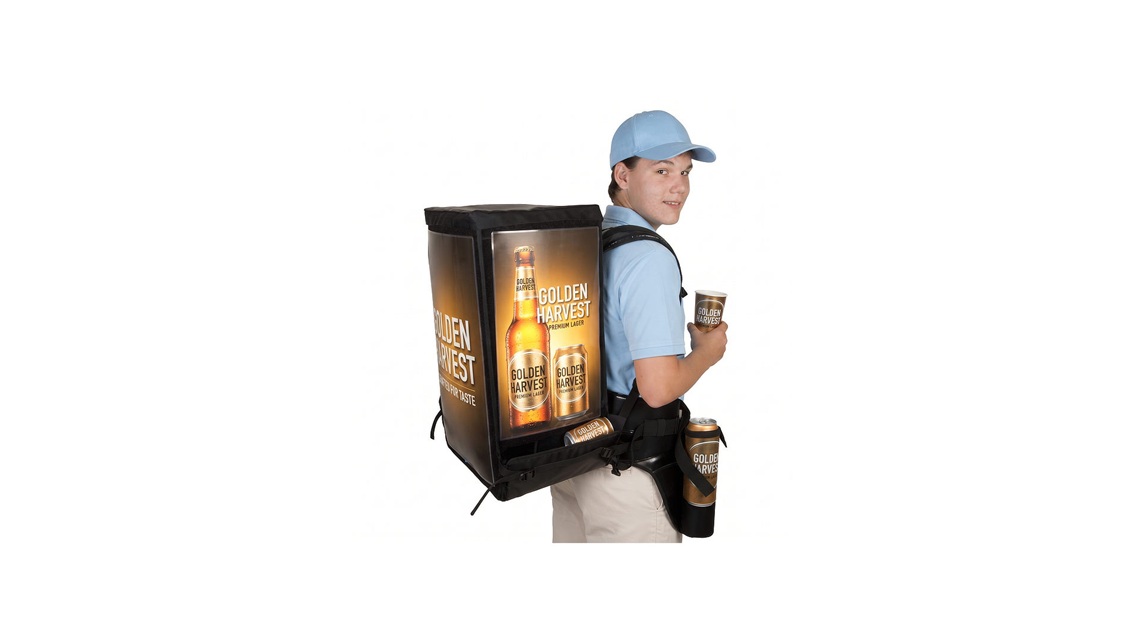
Depending on the model, printed paper graphics can be inserted into transparent display areas. These surfaces may present the coffee brand, sponsor, event campaign or beverage information.
The dimensions differ between backpack models and should be confirmed before artwork is prepared. Graphic design and printing are not automatically included.
Does a coffee vendor backpack guarantee higher revenue?
No. The backpack provides a mobile method of serving or distributing coffee, but it cannot guarantee a particular number of customers, sales volume or financial result.
Performance also depends on the product, price, location, demand, staff, event concept and organization of the service.
How should the system be cleaned after a sales shift?
Remaining coffee should be emptied before residue can dry. The container, outlet, hose, fittings and tap must all be included in the cleaning process.
A suitable beverage-system cleaning product can be used according to its instructions. Afterwards, rinse the complete liquid path thoroughly with clean water and allow the components to drain and dry.
What requires special attention after sweetened or milk-based drinks?
Sugar, syrup and dairy residues can adhere to internal surfaces and should be removed promptly. Milk-containing beverages require a particularly careful hygiene procedure.
The system should not be stored or filled with another beverage until the complete beverage path has been cleaned properly.
What information is required for a coffee vendor backpack quotation?
Please describe both the required equipment and the planned mobile sales process:
- Required number of backpacks
- Type and ingredients of the coffee beverage
- Hot or cold service
- Preferred filling capacity
- Serving or sample cup size
- Cup rim diameter and shape
- Paid sales, hospitality or sampling use
- Planned payment method
- Indoor or outdoor venue
- Expected duration of each service period
- Distance to the refill station
- Required accessories and advertising areas
- Event date or requested delivery date
- Delivery country and postal code
If the operating concept has not yet been finalized, describe the event layout, expected demand and available preparation facilities. These details help identify a suitable available backpack configuration.
Event Catering: Some vendors specialize in providing coffee vendors backpack services for events, conferences, weddings, and other gatherings.
They bring portable setups to cater to the coffee backpack needs of attendees.